|
|
|
|
|
As we close out another week of recovery efforts following Hurricane Helene, I wanted to share an important update. I have been asked to participate in a meeting next week with DHHS Secretary Kinsley and other behavioral health leaders to discuss both immediate and long-term responses. Our focus will be on ensuring provider sustainability and maintaining access to care for those impacted.
In preparation for this meeting, I have requested feedback on whether the stabilization payments that LME-MCOs and Standard Plans can make are discretionary or if a mandate is needed, potentially requiring legislative action. We’ve also raised the idea of offering bonus payments and/or enhanced rates across the state so providers outside the disaster area can handle increased caseloads due to patient displacement. In addition, we hope to examine ways in which APNC can support displaced clients and staff while preparing for long-term recovery.
This update includes several new and updated resources and information to assist with ongoing recovery efforts. We are also maintaining these on our Hurricane Helene Resource Hub and continue to update that page daily. As always, if there is anything we can do to assist you in your recovery efforts, please do not hesitate to reach out.
Sara M. Howe, APNC CEO
ICYMI: Check out this video from our Executive Vice President and some of country music's top songwriters! |
|
|
|
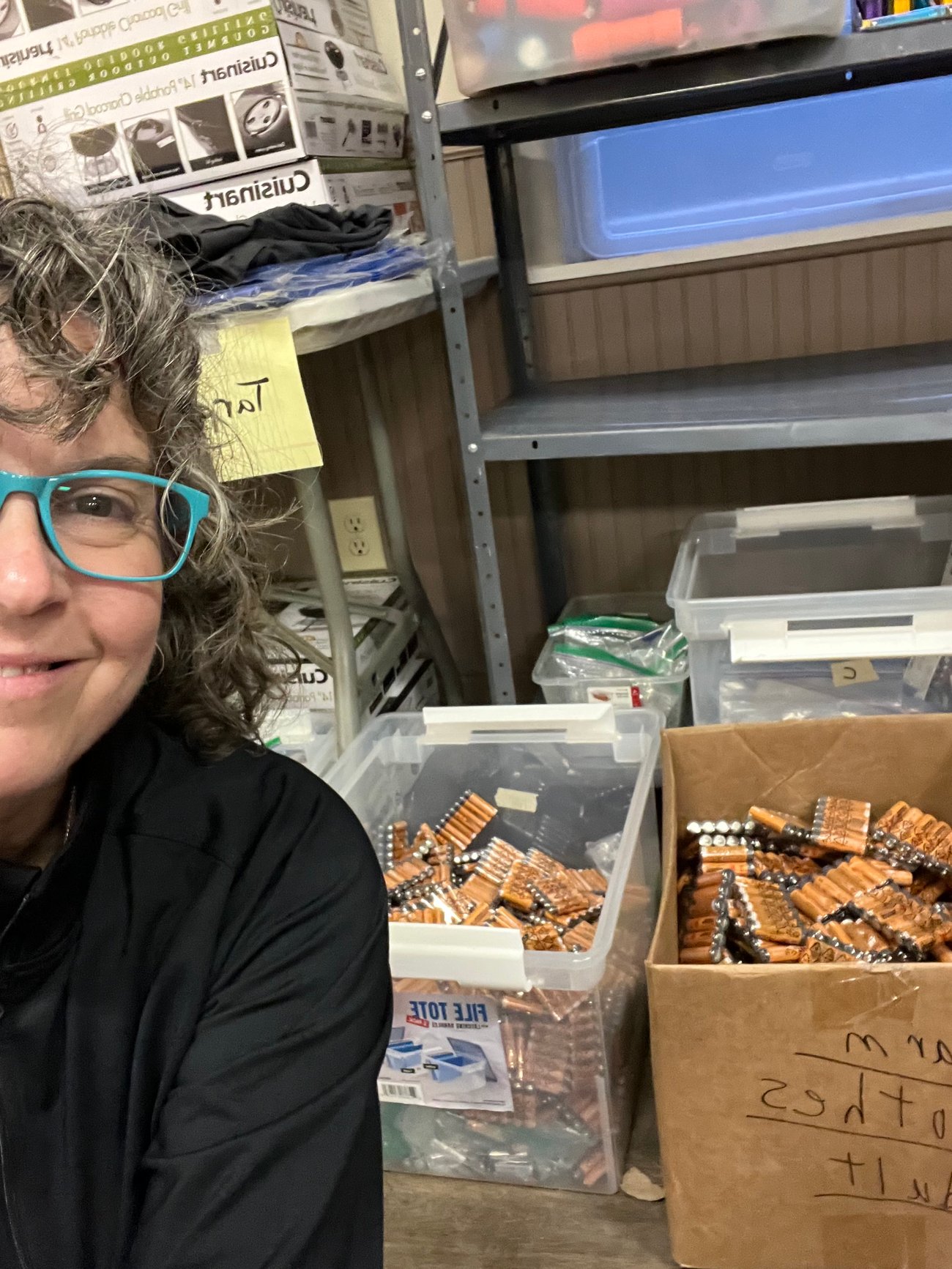
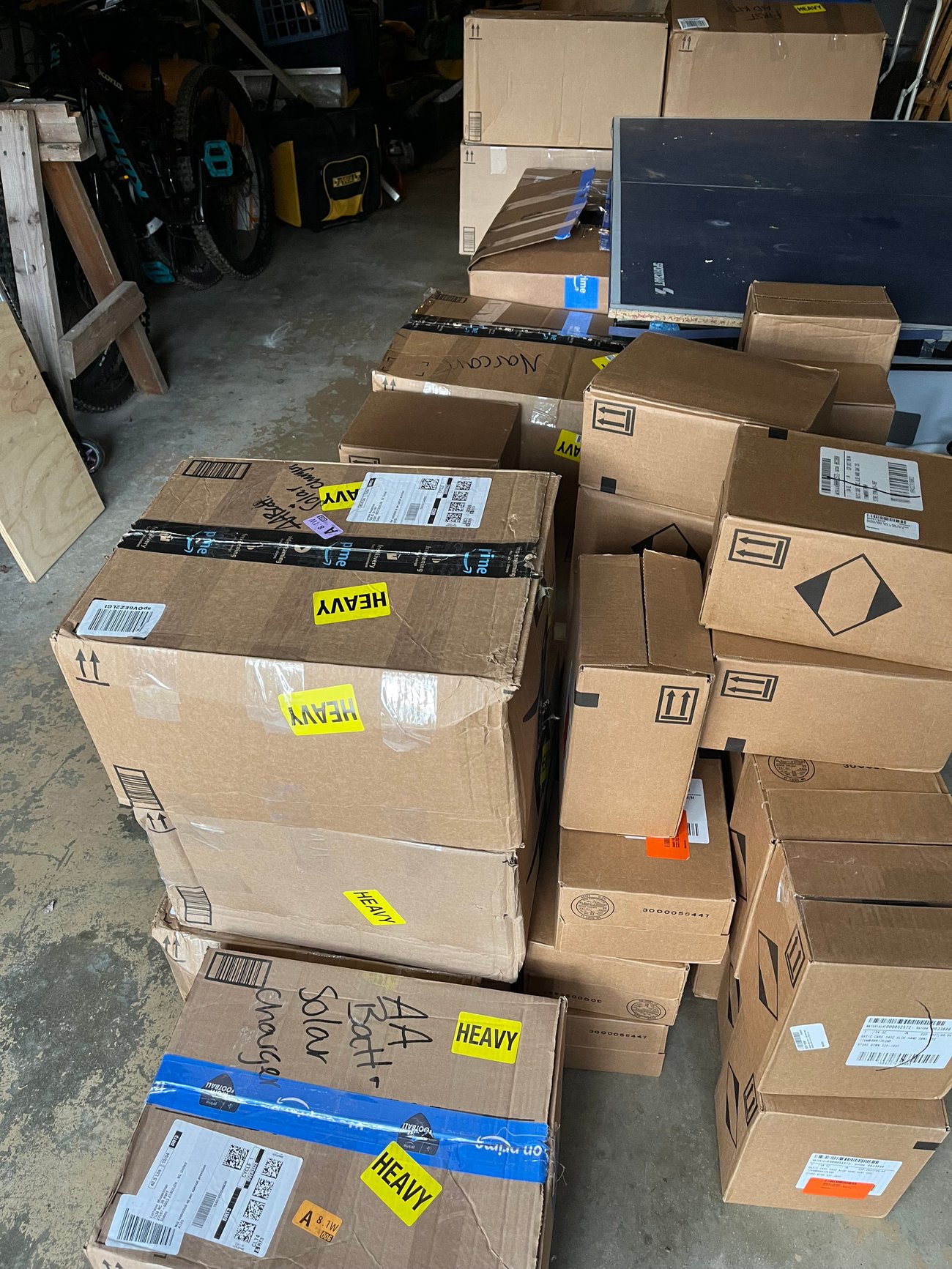
Delivery to the High Country! People are living in a campground next to this donation center & come in throughout the day to gather what they need. Shout out to Gretchen Summerville, APNC's PFS Director, for sorting and shelving these supplies to share with folks in the High Country. |
|
|
|
|
|
|
|
|
|
|
|
NEW! Hurricane Helene Recovery Toolkit
The Hurricane Helene Recovery Communications Toolkit provides Information for communities affected by the storm on a variety of topics. Access the kit for flyers, social media images and videos. Simplified versions and full versions of the flyers are provided in English and Spanish.
|
|
|
|
NEW! Resources for Resilience Listening Circles
Resources for Resilience is providing free daily Listening Circles for all Western North Carolina residents affected by Hurricane Helene. These Listening Circles are an opportunity for community members to connect, lean on one another, and highlight what is getting them through this difficult time.
|
|
|
|
In the aftermath of Hurricane Helene, many businesses and nonprofits in western North Carolina are being forced to make difficult decisions about whether to continue paying some or all of their employees. Many workers who are laid off or furloughed because of the hurricane will need to rely on government unemployment insurance (UI) benefits until they are re-employed. In response to these circumstances, Governor Roy Cooper issued an executive order on Wednesday making several temporary changes to unemployment benefits during the Hurricane Helene state of emergency, which currently extends through March 1, 2025. Governor Cooper’s executive order makes three significant changes that should help nonprofits and their employees who have been affected by Hurricane Helene:
- It temporarily increases weekly state unemployment benefits by $250. This means that the maximum weekly benefits for people affected by Hurricane Helene will be $600 through March 1, 2025.
- It provides that employers will not be charged for the unemployment benefits that their employees receive due to Hurricane Helene through March 1, 2025. Notably, the Governor’s executive order provides for non-charging of benefits for nonprofits that pay state unemployment taxes (SUTA) and for those that elect to reimburse the state for unemployment expenses instead of paying SUTA.
- It waives work search requirements for people receiving unemployment benefits through March 1, 2025.
The North Carolina Council of State – the nine statewide elected officials other than the Governor – voted unanimously to concur with Governor Cooper’s executive order on Wednesday, signaling that this temporary policy change has bipartisan support. The Center is appreciative of Governor Cooper for issuing this executive order to help many North Carolinians who are currently out of work due to Hurricane Helene. We are particularly appreciative that his executive order extends unemployment relief to all nonprofit employees who have been affected by Hurricane Helene and holds harmless all 501(c)(3) nonprofits whose employees are receiving these benefits.
In addition to receiving state unemployment benefits, people who are out of work in western North Carolina because of Hurricane Helene are also eligible for federal Disaster Unemployment Assistance (DUA). These DUA benefits allow workers to receive up to 26 total weeks of unemployment benefits. Notably, DUA provides unemployment assistance to people who do not qualify for state unemployment benefits, including self-employed workers and employees of houses of worship and small nonprofits with fewer than four employees. Nonprofits whose employees receive DUA benefits are not charged for these benefits regardless of whether they pay SUTA or reimburse the state for unemployment claims.
In response to the questions they have received from nonprofits in western North Carolina about unemployment considerations related to Hurricane Helene - and recognizing that answers to several nonprofit-specific unemployment issues are not readily available online – the North Carolina Center for Nonprofits has published an article with more information about state unemployment benefits and DUA for nonprofits affected by Hurricane Helene. They’ll continue to update this article as they receive additional questions from nonprofits or as new information becomes available.
|
|
|
|
NEW! Disaster Supplemental Nutrition Assistance Program (D-SNAP)
- We estimate more than 150,000 people in western NC will apply for up to a combined $120 million in benefits, but the window to apply is short, and we need your help making sure people who may be eligible know about D-SNAP and apply.
- Phase 1 of D-SNAP begins on Friday, October 18 and the application period closes on Thursday, October 24.
- Eligible households will receive a one-time benefit on a debit-like card (called an Electronic Benefits Transfer, or EBT card) to help buy food. The exact amount will depend on household size, income and estimated losses. The benefits are good for up to nine months.
To be eligible for D-SNAP, a person must:
- Live in one of 25 counties in western NC (Alexander, Alleghany, Ashe, Avery, Buncombe, Burke, Caldwell, Catawba, Clay, Cleveland, Gaston, Haywood, Henderson, Jackson, Lincoln, Macon, Madison, McDowell, Mitchell, Polk, Rutherford, Transylvania, Watauga, Wilkes, and Yancey Counties) or Eastern Band of Cherokee households living in zip code 28719.
- Have suffered losses/damages related to Hurricane Helene, such as damage to property or loss of income.
- Have proof of identity and proof of residency (if available).
- Have income and resources below certain levels.
- Not currently receive benefits through the Food and Nutrition Services (FNS) program. People receiving FNS can also get extra help buying food, but do not need to fill out a D-SNAP application. They can get more information about how to get the extra help on the FNS webpage.
People are encouraged to apply for D-SNAP by phone at the D-SNAP Virtual Call Center at 1-844-453-1117 or complete a pre-registration online using the ePASS Pre-Registration Tool, which will open on Oct. 15 for pre-registration and close on Oct. 24. Once applicants complete the pre-registration, applicants will be issued a confirmation number and will need to call 1-844-453-1117 between Oct. 18 through Oct. 24 to complete the interview part of the application. People can also apply at a D-SNAP location in their county. For a full list of places to apply and for more details, visit www.ncdhhs.gov/dsnap. Please note if you live on the Qualla Boundary in the 28719 zip code and you wish to apply in person, DSNAP applications are being taken on the Qualla Boundary at 1526 Acquoni Road, Cherokee, NC 28719.
Residents will be notified if they have been approved within three days of their application and will be able to pick up their EBT card in person at any of the D-SNAP locations or have their card mailed to them overnight at the address they list in the application.
Residents are encouraged to apply for D-SNAP by phone by calling on their assigned day by last name.
Formula and Diapers
In partnership, we’ve sent over 10,000 cases of baby formula to impacted counties.
- We have shipped formula to multiple counties that have requested it (orders have been fulfilled for at least 5 counties plus EBCI).
- NCDHHS has also proactively reached out to counties that were heavily impacted but have not yet made requests to determine needs. Based on this outreach, we shipped a pallet of formula each to the following counties: Avery, Madison, McDowell, Mitchell, Rutherford, Polk, Yancey, and Burke.
- The Diaper Bank of NC is making daily trips to deliver formula and other infant supplies to the impacted counties. They are utilizing 3 trucks, mules, and ATVs to take these supplies out across Western, NC.
- Formula is also being distributed through MANNA Food Bank, which supports 16 impacted counties.
|
|
|
|
ICYMI The Disaster Recovery Act of 2024
House Bill 149, the Disaster Recovery Act of 2024, was passed by the NC General Assembly and signed by Governor Cooper. This included NCDHHS flexibility requests to help the people of Western North Carolina
|
|
|
|
NEW! From DHHS: Emergency Prescription Assistance Program What You Need to Know
Uninsured residents in North Carolina impacted by Hurricane Helene can replace their 30-day supply of certain prescription medications, durable medical equipment, and medical supplies from any pharmacy that participates in the Emergency Prescription Assistance Program (EPAP).
EPAP helps people during a disaster that do not have health insurance get prescription drugs, vaccinations, medical supplies, and medical equipment free of charge.
Contact the EPAP Enrollment Hotline at 855-793- 7470 (TTY 800-876-1089)
Download the Fact Sheet
|
|
|
|
NEW! From DHHS: The State of North Carolina is supporting the reopening of the Baxter plant, which is the nation’s leading supplier of saline solution and other medical supplies.
- Baxter operates a manufacturing plant near Marion, North Carolina that is critical to the nation’s supply of saline solution, IV bags, and other essential medical supplies. The plant was flooded during Hurricane Helene and two bridges that provided ground access to the plant were damaged or destroyed.
- The State of North Carolina is working with Baxter Healthcare to restore bridge access to their plant site, and get their facility back up and running as soon as possible
- NCDOT has repaired the smaller bridge, and as of 3 days ago restored access to their plant. This allowed their stored and undamaged product to be distributed. The State of North Carolina also worked with Florida’s Department of Transportation to secure a larger temporary bridge which has been assembled and is enroute to the site which will allow additional access to support the restoration of the plant.
- NCDHHS has been in near daily contact with representatives from Baxter , and with officials from the Administration for Strategic Preparedness and Response (ASPR) at the US Department of Health and Human Services, and the FDA, regarding the challenges and supply shortages resulting from this plant being offline.
NCDHHS supported Mission Health’s initial transfer of patients to other hospital partners.
- On Sunday 10/6, Mission Health began to transfer selected stable patients to other hospital partners from Asheville Specialty, Care Partners Inpatient Rehabilitation Hospital, Blue Ridge Regional Hospital, and Mission Hospital. This is to ensure they can continue to care for the most acute patients in Western North Carolina, as the leading Trauma center in the region.
- NCDHHS’s Statewide Patient Transfer Coordination team assisted in this initial transfer group, which was completed successfully, and with the needs of the patients at the forefront.
- Any additional patient transport will be coordinated directly by Mission Health, and NCDHHS will remain a resource, if requested.
|
|
|
|
Updates from DHHS
The Division of Mental Health, Developmental Disabilities and Substance Use Services (DMH/DD/SUS) is committed to response efforts from Hurricane Helene.
In close partnership, the Division of Mental Health, Developmental Disabilities and Substance Use Services (DMH/DD/SUS), Division of Health Benefits (DHB), and the Division of Health Service Regulation (DHSR) are temporarily modifying some of the Mental Health, Substance Use Disorder, Intellectual and Developmental Disability, and Traumatic Brain Injury clinical policies to better enable the delivery of care for individuals and providers impacted by Hurricane Helene.
The flexibilities in this bulletin are effective from Sept. 26, 2024, through Dec. 31, 2024 (unless otherwise communicated by DHHS). Additional updates will be provided on the DMHDDSUS Bulletins webpage as they become available.
We are working with county, state, and federal partners to make it faster and easier for uninsured and underinsured individuals to access and receive mental health, substance use, IDD and Traumatic Brain Injury (TBI) services as well as to support providers as they deliver these crucial services. |
|
|
|
The City of Asheville is providing important information about Tropical Storm Helene response efforts through AVL Alert. Sign up at http://ashevillenc.gov/avlalert. |
|
|
|
Please refer to this Medicaid Bulletin for information about payment flexibilities. |
|
|
|
Provider Enrollment
NC DHHS recognizes the need to promote access to care by enrolling all providers in a timely manner and is committed to ensuring the provision of quality care for our citizens. |
|
|
|
|
|
|
|
|
|
|
|
|
|
|
|
|
Recovery can feel heavy, but it doesn’t always have to be. Did you know that fun and play aren’t just distractions but actually powerful tools in your healing process? Learn how reconnecting with your playful side can break old patterns, restore joy, and help you rediscover yourself. When we play, we engage in experimentation, which fosters curiosity and allows us to learn new things about ourselves and the world around us. You deserve joy, not just sobriety! This free 30-minute workshop explores how fun and play can be powerful tools for healing in recovery. By embracing curiosity and experimentation, participants will learn to let go of perfectionism and control, fostering personal growth and creativity. The session provides practical tools for incorporating fun into daily life and reflection techniques to ignite lasting joy.
WHEN: October 22nd 7:00PM Eastern
|
|
|
|
|
|
This section provides links to all previous updates related to our Hurricane Helene recovery efforts. Moving forward, only new items will be highlighted in the newsletter, but you can still access all past updates here and at our Hurricane Helene Resource Hub for reference and ongoing support.
|
|
|
|
|
|
| Disaster Recovery Survey |
|
Taking this survey will help APNC understand the state of the members of our community, and will allow us to better understand the needs of our communities. |
|
|
|
|
|
For those unaffected by the storm, but still looking for ways to help, you can donate to the official North Carolina Disaster Relief Fund here: |
|
If you’re looking for ways to give, here are four funds you can support. These funds are getting urgently needed resources to people directly affected and hardest hit by the storm, including communities with less access to philanthropic dollars:
- Appalachian Helene Response Fund: Donate directly to mutual aid efforts or a recovery fund facilitated by Appalachia Funders Network. Recovery fund donations go through Foundation for Appalachian Kentucky; donors can designate support for NC in notes.
- Emergency and Disaster Response Fund: Support relief efforts by frontline nonprofits in 18 WNC counties and the Qualla Boundary, administered by the Community Foundation of Western NC.
- Organizing Resilience: Provide direct relief through mutual aid and community groups, support economic recovery and small businesses, and promote systemic change to prevent future disasters.
- NC Counts: Donate to grassroots organizations doing recovery work in vulnerable communities. NC Counts Coalition is a nonpartisan, nonprofit 501(c)(3) organization committed to building a healthy, just, and equitable North Carolina through cross-sector partnerships that advance systemic solutions for communities facing systemic barriers, including BIPOC communities, LGBTQ+, low wealth, immigrant, and other communities
|
| NC Disaster Relief Fund |
|
|
|
|
|
|
APNC has created a Hurricane Helene Resource Hub on our website. This hub serves as a centralized location where you can find all of our messages, updates, and important resources related to disaster recovery efforts. We will be archiving our daily communications and adding key links to help support individuals and communities impacted by the storm.
You can visit the Resource Hub here: |
| Hurricane Helene Resource Hub |
|
|
|
|
|
|
|